 Skip to content

Adaptive Security: Why Cyber Defense Needs to Evolve with the Threat Landscape
The growing adoption of technologies like AI, automation and cloud-based infrastructure is reshaping how businesses operate. But at the same time, this also expands the attack surface for cybercriminals. As a result, traditional cybersecurity models, built around fixed defenses and known threat signatures, are no longer enough to counter the speed and sophistication of today’s threats.
From AI-powered phishing to prompt injection attacks, cyber risks are becoming more dynamic and unpredictable. To keep up, businesses need a security model that can evolve in real-time to keep up with the hackers. This means adopting an adaptive security posture that can respond quickly to new threats and take a more proactive approach to protecting systems and data.
Why Traditional Security Models Fall Short in the AI Era
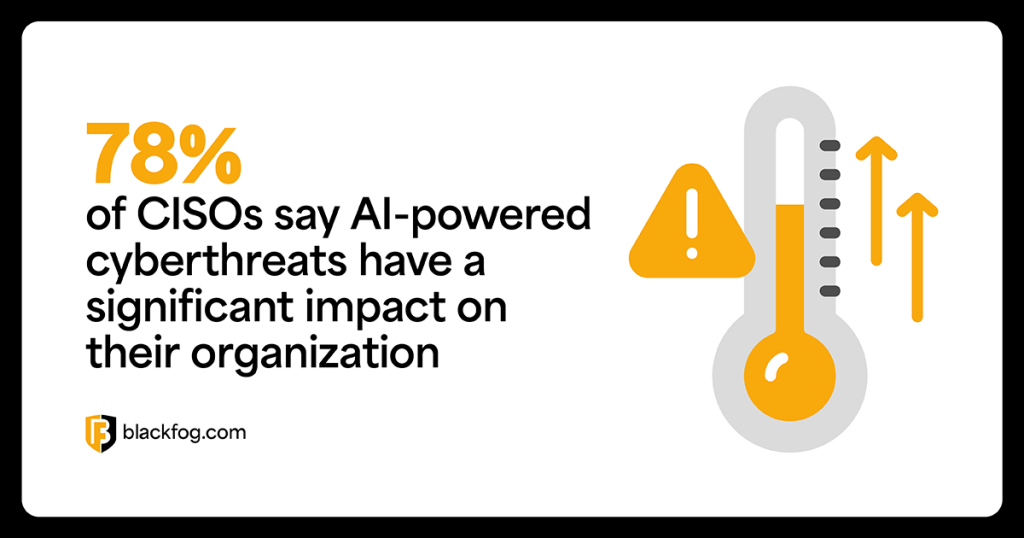
Traditional security models rely heavily on static rules, known threat signatures and perimeter-based defenses. While effective against familiar attack patterns, they struggle to detect or respond to threats that evolve in real-time. Modern cybercriminals use adaptive techniques, including AI-driven malware, fileless attacks and zero-day exploits, to bypass these fixed defenses. Indeed, according to Darktrace, 78 percent of CISOs now admit AI-powered cyberthreats are having a significant impact on their organization.
Legacy models also tend to respond too slowly. In many cases, by the time they are able to identify an incident in progress, the damage has already been done. In a landscape where threats can change daily, reactive security is no longer enough. Businesses need systems that learn, adapt and respond proactively to stay ahead of emerging risks.
Evolving Threats: A New Era of Cyber Risk
Today’s cyber landscape is shaped by speed, automation and increasingly targeted tactics. As businesses digitize more of their operations and adopt tools like large language models (LLMs), threat actors are evolving just as quickly. In many cases, attacks are no longer isolated events but part of broader, continuous campaigns that exploit weak points across systems, users and connected platforms.
Understanding how these threats operate is essential for building defenses that can adapt to match their sophistication. Key modern cybersecurity issues that businesses will need to be prepared for include:
- Prompt injection attacks: Manipulate AI models into revealing sensitive data or executing unauthorized actions.
- Polymorphic malware: Constantly rewrites its code to avoid detection by signature-based tools.
- Ransomware-as-a-service: Makes advanced ransomware accessible to less skilled attackers.
- Deepfake social engineering: Uses AI-generated audio or video to impersonate executives or staff.
What Is Adaptive Security?
Adaptive security is a proactive approach to cybersecurity that continuously assesses risk, detects anomalies and responds to threats in real-time. Unlike traditional models that rely on predefined rules or known signatures, adaptive security uses context, behavior analysis and live threat intelligence to evolve with the landscape.
A key pillar of this approach is not only to detect and respond to threats as they occur, but also anticipate potential attack vectors before they are exploited. This approach is especially effective against modern threats such as polymorphic malware, supply chain attacks and LLM cybersecurity issues like prompt hacking. By using continuous monitoring and identifying unusual activity or deviations from normal behavior, adaptive security allows firms to act before damage occurs.
Technologies That Power Adaptive Security
At the heart of adaptive security is the ability to detect threats before they do damage. This relies on constant monitoring of systems, networks and user behavior to identify anomalies that could signal an attack. Rather than waiting for alerts based on known threats, adaptive security looks for subtle shifts and emerging patterns to act early. Key technologies that enable adaptive security include:
- Behavioral analytics: Tracks typical user and system activity to flag deviations from the norm that may indicate compromise.
- AI-driven threat detection: Uses machine learning to identify complex attack patterns and adapt to new threats in real-time.
- Security Information and Event Management: Aggregates and analyzes data from across the organization to identify risks quickly.
- Anti data exfiltration: Prevents unauthorized data transfers by identifying and blocking unusual outbound traffic.
- Zero trust architecture: Assumes no user or device is trusted by default, limiting access based on verification and context.
Together, these technologies form a dynamic defense system that evolves with the threat landscape.
Best Practices for Building an Adaptive Security Strategy
Building an effective adaptive security strategy requires more than just deploying new tools. It demands continuous reassessment of risks, systems and processes to keep pace with evolving threats.
Regular penetration testing, threat modeling and red teaming help uncover vulnerabilities before attackers do. Ongoing employee training is also essential to raise awareness of phishing, social engineering and other human-targeted attacks.
Businesses must also pay close attention to new technologies they adopt, particularly AI. These can often introduce new security risks like LLM prompt injection that IT professionals do not fully recognize or understand. Therefore, such systems must be carefully monitored and governed to prevent misuse or data exposure.
Adaptive security is not a set-it-and-forget-it solution. It is a living process that requires a shift in mindset to treat cybersecurity as a continuous function that evolves with the business, not a static layer added after the fact.
Share This Story, Choose Your Platform!
Related Posts

The State of Ransomware: February 2026
BlackFog's state of ransomware February 2026 measures publicly disclosed and non-disclosed attacks globally.

Steaelite RAT Enables Double Extortion Attacks from a Single Panel
Steaelite is a newly emerging RAT that unifies credential theft, data exfiltration, and ransomware in a single web panel, accelerating double extortion attacks.

ClawdBot and OpenClaw: When Local AI Becomes A Data Exfiltration Goldmine
ClawdBot stores API keys, chat histories, and user memories in plaintext files, and infostealers like RedLine, Lumma, and Vidar are already targeting it.

West Harlem Group Assistance Stops Ransomware and Cryptojacking with BlackFog ADX
West Harlem Group Assistance secures its community mission by preventing ransomware and cryptojacking with BlackFog ADX.
Why Traditional Security Fails To Deal With Advanced Persistent Threats
Learn why advanced persistent threats remain a growing cybersecurity risk in 2026 and where organizations must focus to address them.
What Does Advanced Threat Protection Really Mean In 2026?
Find out why businesses need advanced threat protection to cope with the new era of sophisticated, persistent cyber risks.